A venous leg ulcer is an open sore that develops on the lower leg, most often just above the inner ankle, and is slow to heal. It is the most advanced stage of chronic venous insufficiency (CVI) — the same underlying valve problem behind many varicose veins. The most important thing to understand is that these ulcers are treatable, and that healing depends on addressing the vein disease causing them, not just dressing the wound.
What Are Venous Leg Ulcers?
Venous leg ulcers — sometimes called venous stasis ulcers — are shallow, often irregularly shaped wounds on the lower leg. They tend to persist for weeks or months and may weep fluid. Unlike a scrape or cut, they do not heal on their own because the underlying circulation problem keeps the area under stress. They are the leading cause of chronic leg wounds.
Why Do Venous Leg Ulcers Form?
The root cause is venous hypertension — sustained high pressure in the leg veins. When the one-way valves inside the veins fail, blood pools in the lower leg instead of returning efficiently to the heart. Over time, this elevated pressure damages the skin and tissue near the ankle, reducing its ability to heal and eventually breaking down into an open ulcer. Because the pressure is ongoing, the wound keeps reopening until the reflux is corrected.
What Are the Warning Signs Before an Ulcer Forms?
Venous ulcers rarely appear without warning. The skin usually shows changes first, and recognizing them early is the best opportunity to prevent an ulcer from ever developing:
- Brownish or reddish discoloration of the skin around the ankle
- Hardening or tightening of the skin (a firm, leathery texture)
- Itching, dryness, or flaking over the lower leg
- Persistent swelling that worsens through the day
- Aching, heaviness, or a feeling of fullness in the legs
If you notice these changes, it is worth having your veins evaluated before the skin breaks down. Our guide to varicose vein causes and symptoms covers many of the same early signs.
Why Is Treating the Underlying Vein Reflux the Key to Healing?
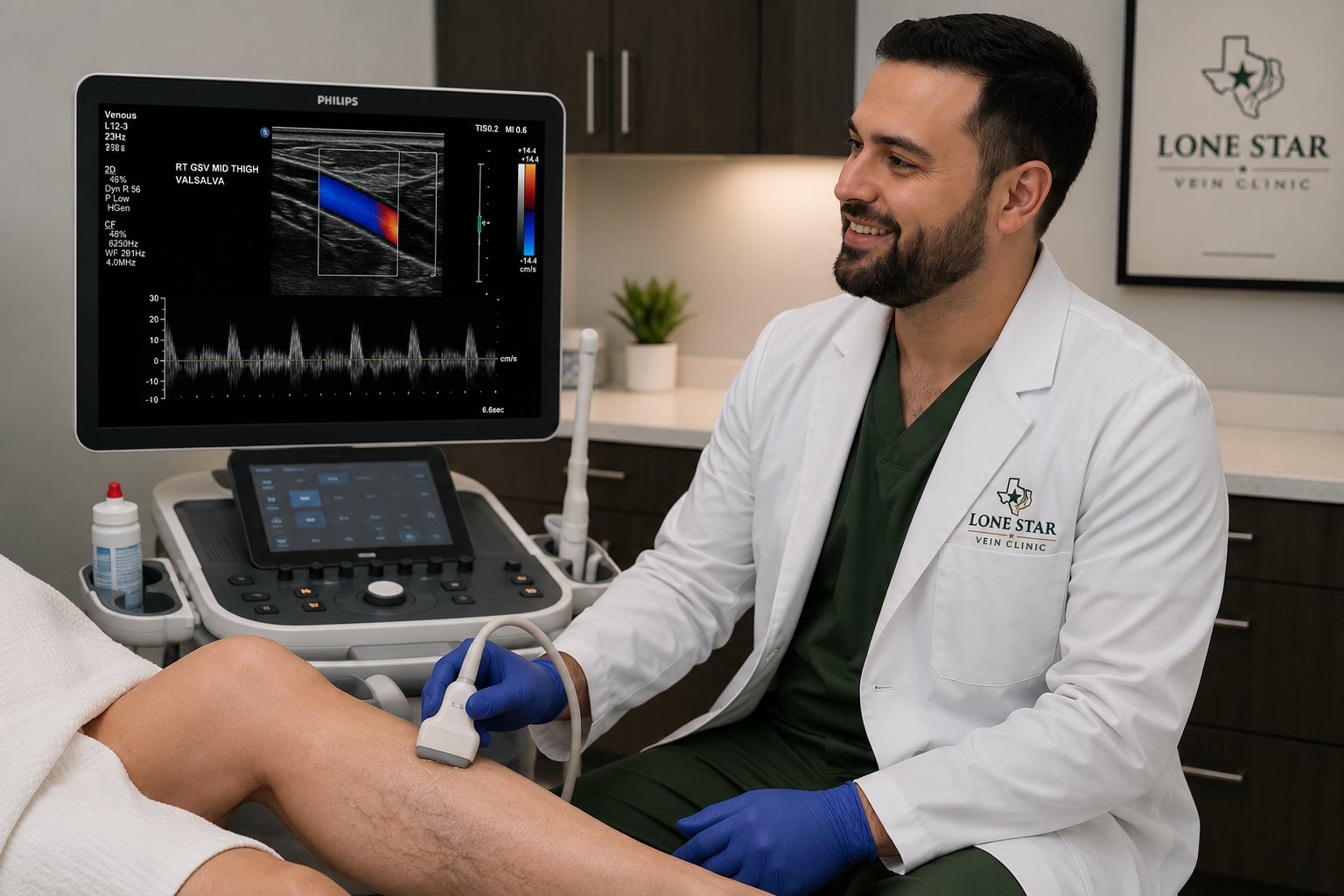
Wound care and compression can help an ulcer improve, but if the faulty veins driving the pressure are left untreated, ulcers commonly return. That is why correcting the underlying reflux is central to durable healing. Minimally invasive procedures such as radiofrequency ablation (RFA) and VenaSeal close the malfunctioning vein so blood reroutes to healthy vessels, lowering the pressure that caused the ulcer. Dr. Abdullah uses ultrasound-guided mapping to identify exactly which veins are responsible before recommending treatment.
What Role Does Compression Therapy Play?
Compression therapy — using graduated compression stockings or wraps — is a cornerstone of both healing and prevention. By gently squeezing the leg, compression helps push blood upward, counteracts venous hypertension, and reduces swelling that impairs healing. It works best alongside treatment of the underlying reflux rather than as a standalone fix. Your physician will advise on the right level of compression for your situation.
How Can Venous Leg Ulcers Be Prevented?
- Have early skin changes and varicose veins evaluated before an ulcer develops
- Wear compression stockings as directed if you have venous insufficiency
- Elevate your legs when resting to ease pressure in the lower leg
- Stay active — walking engages the calf muscle pump that moves blood upward
- Moisturize dry, fragile skin and protect the lower legs from injury
Untreated chronic venous insufficiency is progressive, meaning it tends to worsen over time if left alone. But with the right care — correcting the reflux, supporting the skin, and using compression — venous ulcers can heal and recurrence can be reduced. You can find more everyday strategies in our article on improving your vein health, and answers to common questions on our patient FAQ.
Have a sore that won't heal or skin changes near your ankle? Dr. Abdullah offers free consultations at our Georgetown clinic.
Book a Consultation