Because both conditions affect the veins in the legs, patients often confuse deep vein thrombosis (DVT) with varicose veins. But they are very different problems. Varicose veins are a chronic condition involving the surface veins, while DVT is a blood clot in a deep vein that requires urgent medical attention. Understanding the difference could genuinely save a life.
⚠ Suspected DVT is a medical emergency.
If you have sudden swelling, pain, warmth, or redness in one leg — especially the calf — call 911 or go to the nearest emergency room immediately. A clot can travel to the lungs and cause a pulmonary embolism. Do not wait for a routine appointment.
What Are Varicose Veins?
Varicose veins are enlarged, twisting, rope-like veins that appear just beneath the surface of the skin, usually on the legs. They develop when the one-way valves inside the vein weaken or fail, allowing blood to pool and flow backward — a condition called venous reflux, or chronic venous insufficiency. Varicose veins are extremely common and, while they can cause aching, heaviness, itching, and swelling, they are generally not an emergency. You can read more in our overview of varicose vein causes and symptoms.
What Is Deep Vein Thrombosis (DVT)?
Deep vein thrombosis is a blood clot that forms in one of the deep veins located within the muscles of the leg — not the surface veins you can see. Because these veins carry a large volume of blood back to the heart and lungs, a clot here is dangerous. If part of the clot breaks free, it can travel to the lungs and cause a pulmonary embolism, which is potentially fatal. DVT can develop after long periods of immobility, surgery, injury, pregnancy, or in people with certain clotting risk factors.
How Do the Symptoms Differ?
Varicose veins tend to develop gradually and are usually visible on the surface. DVT symptoms often come on suddenly and typically affect just one leg.
- Varicose veins: visible bulging or twisting veins, aching or heaviness that worsens with standing, mild swelling, itching, and skin changes over time — usually in both legs.
- DVT warning signs: sudden swelling in one leg, calf pain or cramping, warmth over the area, and skin that looks red or discolored. Some clots cause no symptoms at all, which is part of what makes DVT so dangerous.
Are Varicose Veins and DVT Related?
They are different conditions, but they are not entirely unconnected. Both involve poor blood flow through the veins, and severe, untreated venous disease can be one of several risk factors for clotting. However, having varicose veins does not mean you will develop DVT, and most people with varicose veins never do. The key point is that they require completely different responses: varicose veins are managed with elective treatment, while suspected DVT is an emergency.
When Should I See a Vein Specialist vs. Go to the ER?
If you have visible varicose veins, leg heaviness, or aching that builds over weeks or months, that is a reason to schedule an evaluation with a vein specialist — not an emergency. If you have the sudden, one-sided symptoms described above, or any chest pain or shortness of breath, treat it as an emergency and seek immediate care. When in doubt about sudden leg symptoms, err on the side of caution and get evaluated right away.
How Does Duplex Ultrasound Tell Them Apart?
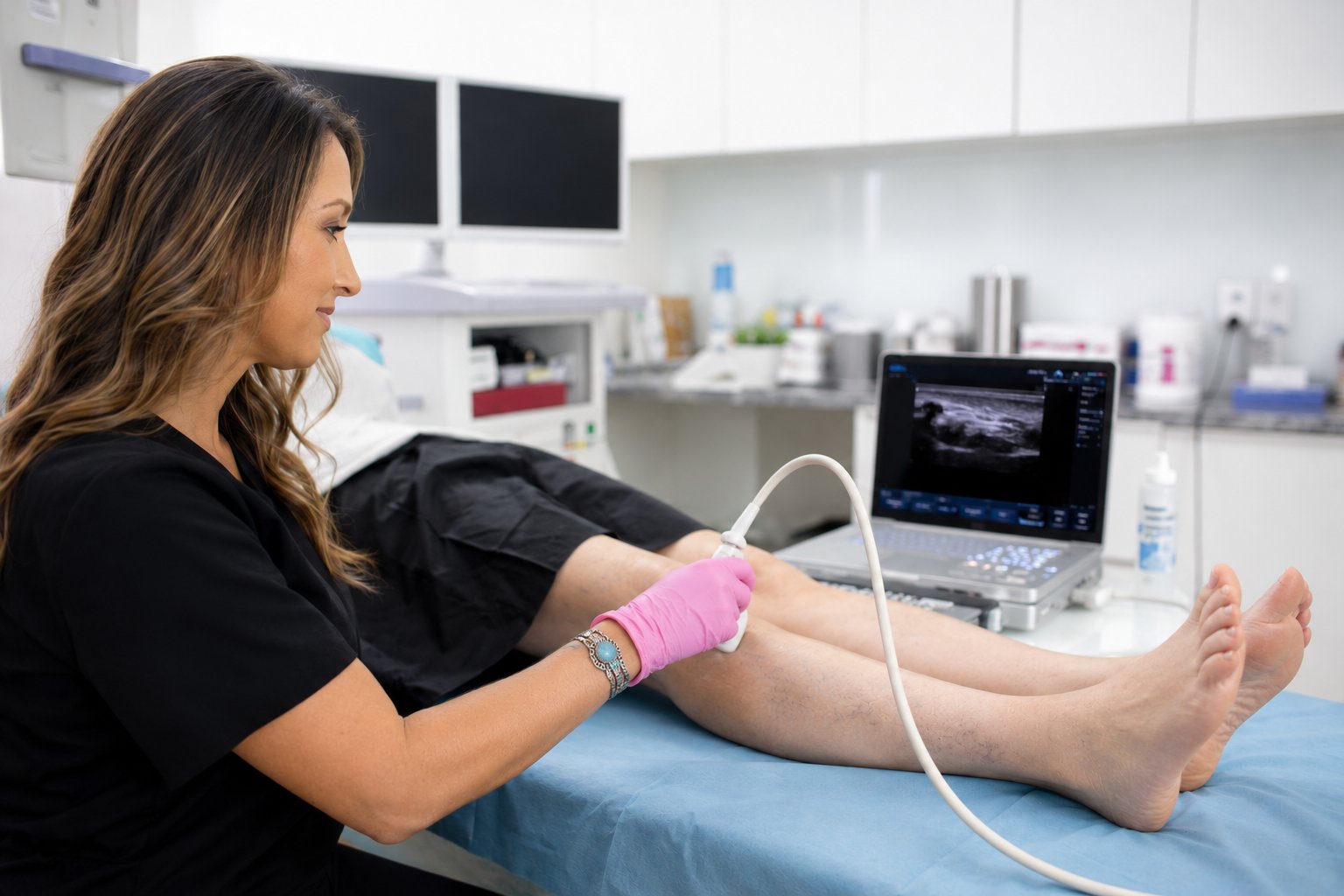
Duplex ultrasound is the standard, painless imaging test used to evaluate both conditions. It combines a picture of the vein with a real-time view of blood flow, allowing a physician to see whether surface-vein valves are leaking (reflux) or whether a clot is blocking a deep vein. At Lone Star Vein Clinic, Dr. Abdullah uses ultrasound-guided evaluation to map the veins accurately before recommending any treatment. If a deep clot is suspected, prompt imaging and appropriate medical management are essential.
Concerned about visible varicose veins or leg heaviness? Dr. Abdullah offers free consultations at our Georgetown clinic.
Book a Consultation