Today, patients with varicose veins have more treatment options than ever. Dr. Abdullah offers Radiofrequency Ablation (RFA), VenaSeal, and Varithena — three distinct, minimally invasive procedures, each with unique advantages. Understanding the differences helps you come to your consultation informed and ready to discuss the best option for your individual anatomy and lifestyle.
Radiofrequency Ablation (RFA)
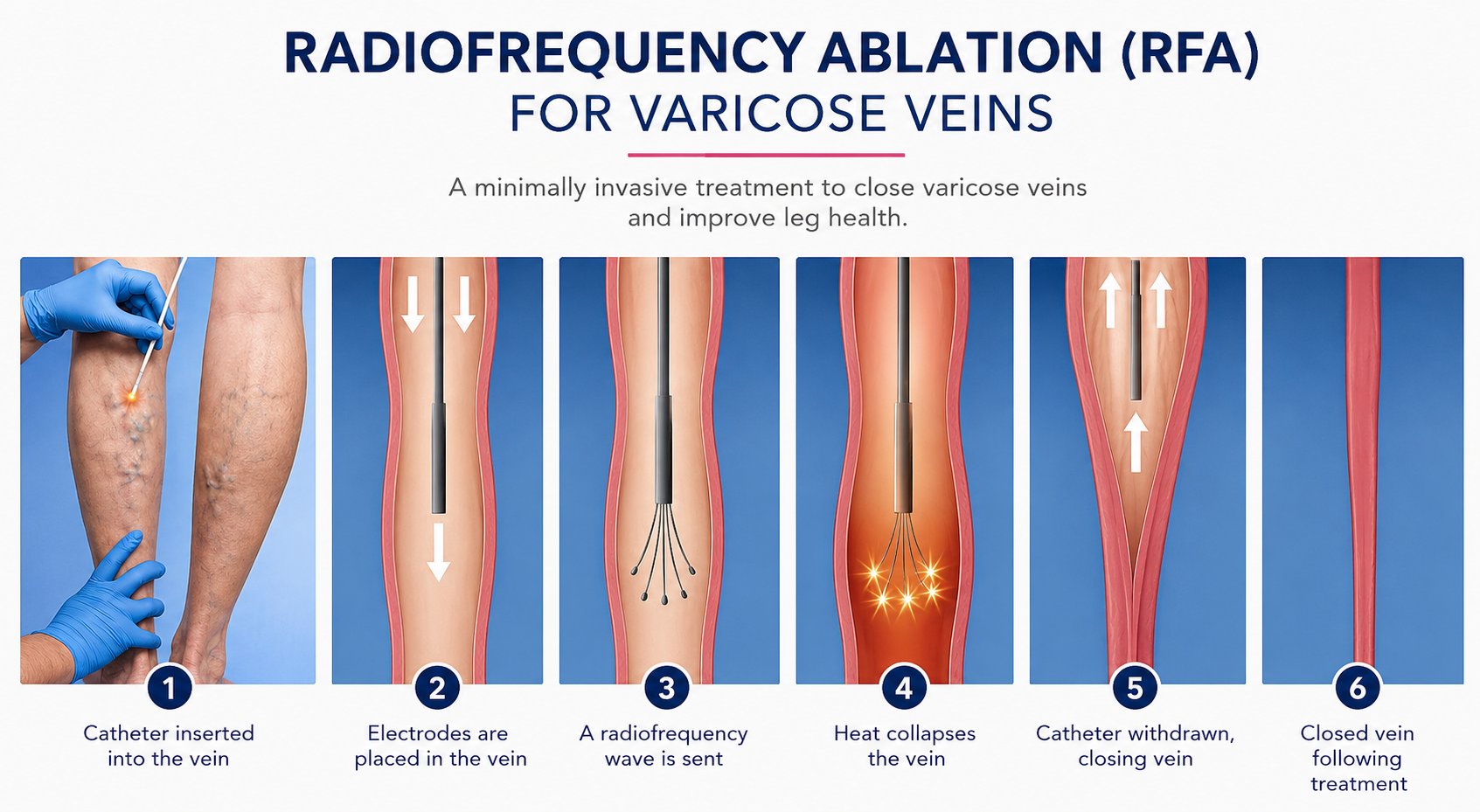
RFA uses precisely controlled heat energy delivered through a thin catheter to close the diseased saphenous vein from the inside. It is one of the most proven vein closure technologies available, with success rates exceeding 95%. The procedure takes approximately 30 minutes. Patients walk out the same day, drive themselves home, and most return to normal activity immediately.
RFA is covered by most major insurance plans when medically necessary, making it a common first-line choice for many patients with symptomatic varicose veins. Learn more about RFA →
VenaSeal
VenaSeal uses a medical-grade cyanoacrylate adhesive to seal the diseased vein — no heat, no tumescent anesthesia injections along the vein, and typically no compression stockings required afterward. It requires only a single needle access point, making it exceptionally comfortable for patients who want to minimize procedural discomfort or who cannot wear compression garments.
Varithena
Varithena is the only FDA-approved injectable microfoam specifically indicated for treating varicose veins caused by great saphenous vein insufficiency. It is non-thermal and particularly effective for large, tortuous, or previously treated veins that may be difficult to access with a catheter. The foam takes approximately 10 minutes to administer and can treat veins above and below the knee through a single access point.
Side-by-Side Comparison
| Feature | RFA | VenaSeal | Varithena |
|---|---|---|---|
| Technique | Thermal (heat) | Medical adhesive | Injectable foam |
| Anesthesia | Tumescent local | Minimal local | Minimal local |
| Compression stockings | Usually required | Typically not required | Usually required |
| Insurance coverage | Most plans | Many plans | Many plans |
| Best for | Straight saphenous veins | Minimizing discomfort | Tortuous or large veins |
How Does Dr. Abdullah Decide?
The best procedure depends on your individual anatomy — the size, location, and extent of your diseased veins as identified on your venous duplex ultrasound. Dr. Abdullah will review your findings and discuss all your options during your free consultation, giving you a clear recommendation and answering all your questions. In some cases, a combination of procedures is recommended for the most complete result.
Not sure which procedure is right for you? Dr. Abdullah will build a personalized plan at your free consultation.
Book Free Consultation