Varicose veins affect millions of Americans. Yet despite how common they are, many patients wait years before seeking treatment — often assuming leg heaviness, aching, and visible veins are just a normal part of getting older. They are not. Varicose veins are a treatable medical condition, and today's procedures are faster, less invasive, and more effective than ever before.
What Causes Varicose Veins?
Your leg veins have tiny one-way valves that keep blood flowing upward toward your heart. When those valves weaken or fail — a condition called chronic venous insufficiency — blood pools in the vein, causing it to enlarge and twist. The result is varicose veins: those rope-like, bulging vessels visible beneath the skin.
Risk factors include family history, prolonged standing or sitting, multiple pregnancies, and female sex. But varicose veins can affect anyone — including men and younger adults. Age is also a factor: the valves in our veins naturally weaken over time, which is why vein disease is especially prevalent in adults over 50.
Common Symptoms to Watch For
Varicose veins are often more than a cosmetic concern. Symptoms can significantly impact daily quality of life:
- Leg aching, heaviness, or fatigue — especially after prolonged standing
- Visible bulging or twisted veins beneath the skin
- Swelling in the ankles and calves by end of day
- Burning, throbbing, or cramping in the legs
- Restless legs or night cramps that disrupt sleep
- Skin discoloration, hardening, or darkening near the ankles
- Itching around affected veins
Is It Just a Cosmetic Issue?
This is one of the most common misconceptions we encounter. While spider veins are primarily cosmetic, varicose veins are a medical condition that can significantly impact quality of life. Left untreated, they can progress to more serious complications, including venous leg ulcers, skin breakdown, and superficial blood clots.
In many cases, treatment is covered by medical insurance precisely because varicose veins are a medical condition. Learn more about insurance coverage →
When Should You See a Doctor?
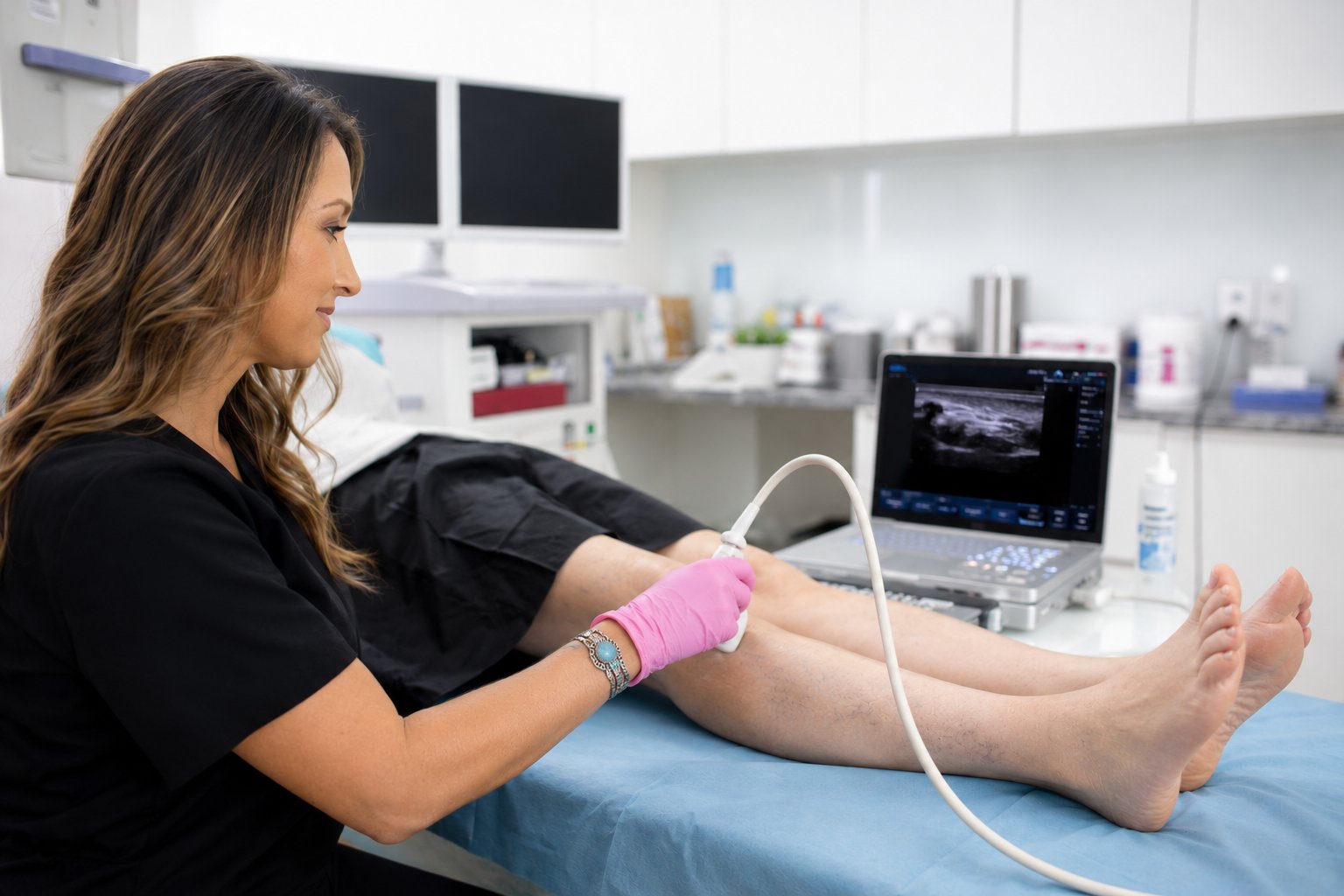
As soon as symptoms are affecting your daily life. You do not need to wait until your veins are severe or painful to seek an evaluation. A venous duplex ultrasound — performed right in our office — can identify the root cause of your symptoms and guide an accurate treatment recommendation.
Today's treatments are nothing like the painful vein stripping of the past. Most procedures at Lone Star Vein Clinic take less than 30 minutes, require no hospital stay, and allow patients to drive themselves home and return to normal activity the same day.
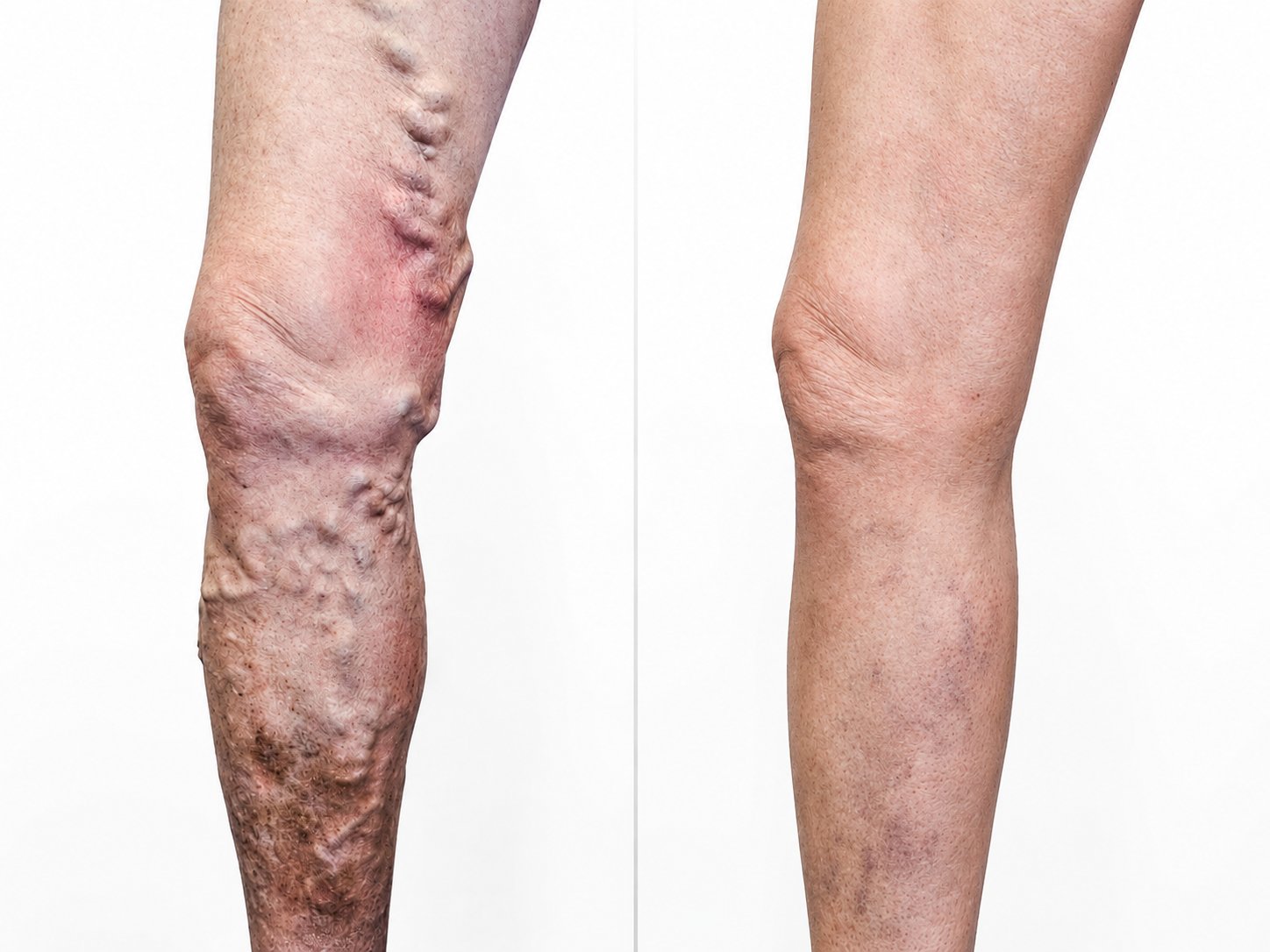
Illustrative images for educational purposes.
Wondering if your symptoms are vein-related? Dr. Abdullah offers free consultations — no referral needed.
Book Free Consultation