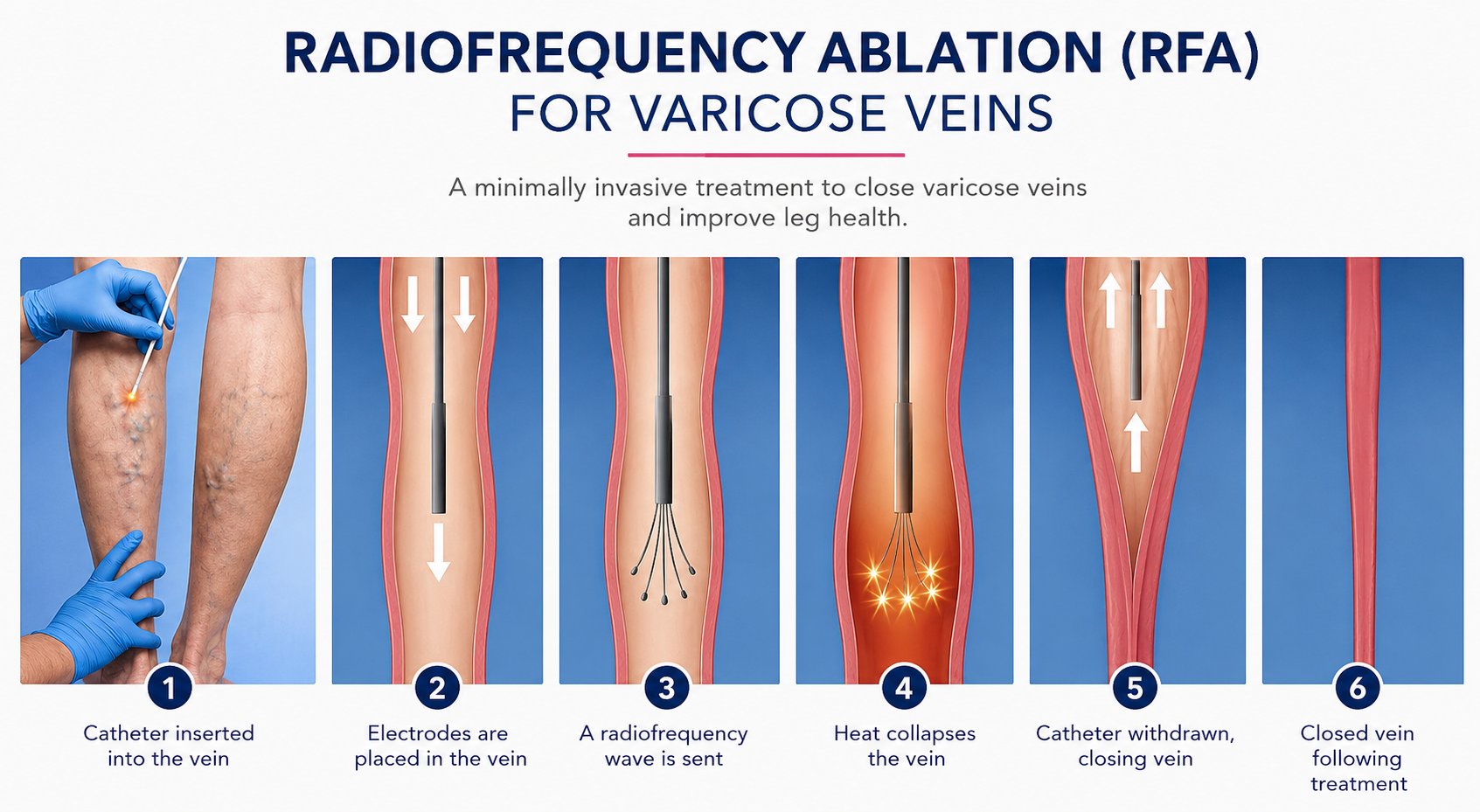
Modern vein closure procedures have made treatment far easier than the vein stripping surgeries of the past. Both radiofrequency ablation (RFA) and VenaSeal close a faulty vein from the inside so blood reroutes to healthy veins — and both are designed around a quick, minimally disruptive recovery. Knowing what is normal helps you relax and heal with confidence.
Your Recovery Timeline
The Same Day
Both procedures are done in the office, and you will be encouraged to get up and walk right away. Most patients drive themselves home and return to light daily activities the same day. After RFA, a compression stocking is typically applied before you leave. VenaSeal often requires little or no compression afterward, since it uses a medical adhesive rather than heat — Dr. Abdullah will tell you which applies to you.
Early Healing
It is normal to feel mild tenderness, some bruising, and a tight or "pulling" sensation along the path of the treated vein — this tends to be a little more noticeable after RFA than VenaSeal. Keep moving with short, frequent walks and continue any compression as directed. Most people manage any discomfort with over-the-counter pain relief if needed.
Back to Routine
Bruising fades and the pulling sensation eases over the first week or two. You can generally resume most normal activities quickly, but hold off on strenuous exercise, heavy lifting, and long flights or long car rides for a short period as advised. Walking daily remains one of the best things you can do for healthy circulation.
Results and Follow-Up
Symptom relief — less aching, heaviness, and swelling — often begins within the first few weeks, while the cosmetic appearance of surface veins continues to improve over the following weeks to months. A follow-up ultrasound is usually performed to confirm the treated vein has successfully closed. Some patients need a small touch-up, such as sclerotherapy, for any remaining surface veins.
RFA vs. VenaSeal: The Key Difference in Recovery
Recovery for the two procedures is very similar, with one practical distinction. RFA uses heat energy, which requires numbing fluid around the vein and usually a period of compression stockings afterward. VenaSeal uses a medical adhesive to seal the vein, so it typically involves less numbing and often little or no compression. Both allow same-day walking and a fast return to activity. For a fuller side-by-side comparison, see our article on RFA vs. VenaSeal vs. Varithena.
When to Call the Clinic
Complications after these procedures are uncommon, but you should contact us promptly if you notice any of the following:
- Increasing pain, redness, warmth, or swelling in the leg rather than gradual improvement
- Significant calf swelling or tenderness
- Sudden shortness of breath or chest pain — call 911 immediately
- Fever, or drainage or spreading redness at a needle site
- Any symptom that worries you or does not seem to be settling down
When in doubt, it is always better to call. We would rather hear from you and reassure you than have you wait.
Tips for a Smooth Recovery
- Walk regularly in short sessions throughout the day — movement is the engine of good circulation
- Wear your compression stockings exactly as directed, especially after RFA
- Avoid strenuous exercise, heavy lifting, and prolonged sitting or standing for the period you are advised
- Postpone long flights or long car trips briefly, as extended immobility is best avoided early on
- Stay well hydrated and keep your follow-up ultrasound appointment so we can confirm the vein has closed
- Take over-the-counter pain relief only as recommended, and follow any specific instructions we provide
Considering RFA or VenaSeal? Dr. Abdullah offers free consultations at our Georgetown clinic.
Book Free Consultation