It's one of the first questions patients ask us: "If I don't have insurance, what is this going to cost me?" It's a fair question — and an important one. The honest answer is that vein treatment cost varies from person to person, because no two sets of legs are the same. Rather than quote a number that may not apply to you, we'd rather explain what actually drives the price so you can make an informed decision.
Why There's No One-Size-Fits-All Price
Vein treatment isn't a single procedure — it's a range of treatments matched to a specific diagnosis. Your final cost depends on several factors:
A single course of sclerotherapy for a small cluster of spider veins is a very different undertaking than treating an underlying varicose vein problem that may require ultrasound mapping and a closure procedure. That's why the only accurate estimate is one built around your exam.
First, Ask: Is It Medically Necessary or Cosmetic?
This is the single biggest factor in what you'll pay — and it's the reason "without insurance" isn't always the right frame for the conversation. When vein disease is causing symptoms that affect your quality of life (aching, heaviness, swelling, skin changes) and conservative measures haven't helped, treatment is often considered medically necessary — and medically necessary vein treatment is frequently covered by insurance, sometimes at 100% after your deductible.
Before assuming you'll be paying out of pocket, it's worth finding out whether your treatment qualifies. Many patients who arrive expecting a self-pay bill discover their care is covered. Our team can verify your benefits for you — see our insurance page for details on the plans we accept.
When Vein Treatment Is Self-Pay
Purely cosmetic work — most commonly spider vein treatment done for appearance rather than symptoms — is typically not covered by insurance and is paid out of pocket. If your spider veins are tied to an underlying venous problem, though, the picture can change, so it's worth having Dr. Abdullah evaluate them rather than assuming.
If you're uninsured or your treatment is elective, the cost still comes down to the same factors above: the procedure chosen, how many areas are treated, and how many sessions your results require.
Questions Worth Asking
Whether you call us or another clinic, these questions will help you compare apples to apples:
Is the diagnostic ultrasound included? Is the consultation free? How many sessions am I likely to need — and is each priced separately? Are follow-up visits included?
See Our Cost GuideA trustworthy clinic will answer these plainly and put the numbers in writing. Be cautious of "starting at" pricing that doesn't account for your actual diagnosis.
Payment & Financing Options
Cost should never be the reason you live with painful legs. For patients paying out of pocket, we're happy to discuss payment options during your visit, and financing plans are commonly available to spread treatment over manageable monthly payments. Because a free consultation is exactly that — free — you can learn where you stand at no cost and no obligation before committing to anything.
Get a Personalized Estimate — Not a Guess
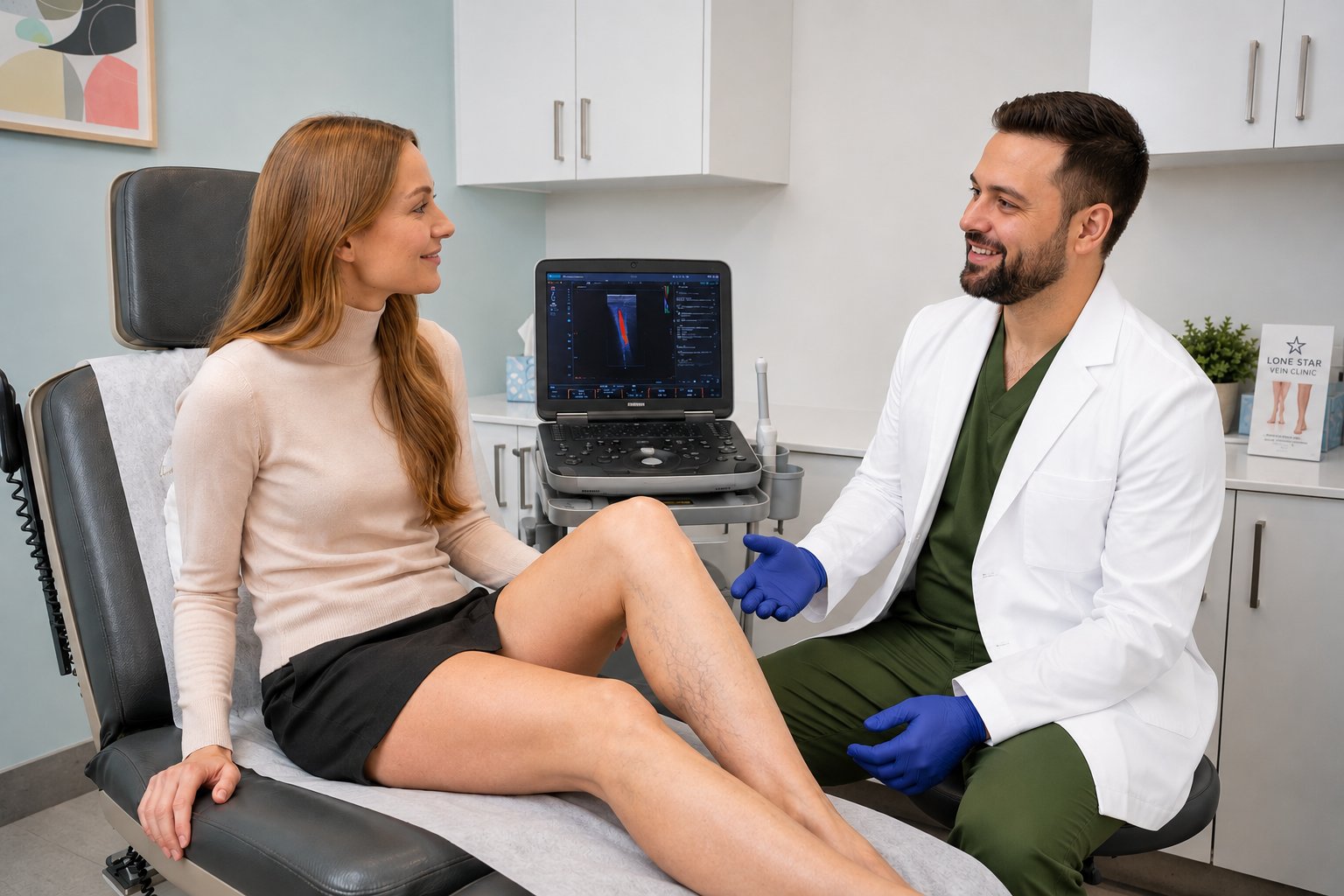
The most useful thing we can offer isn't a price list — it's a real estimate for your situation. Call us and we can walk you through likely costs over the phone, verify any insurance you do have, and answer your questions honestly. At your free consultation, Dr. Abdullah examines your legs, determines what (if any) treatment is appropriate, and our team provides a clear, written estimate of your out-of-pocket responsibility before anything is scheduled. No surprises.
Want a personalized cost estimate? Call us or book a free consultation — we'll give you real numbers, not a guess.
Book Free Consultation