What Is VenaSeal™?
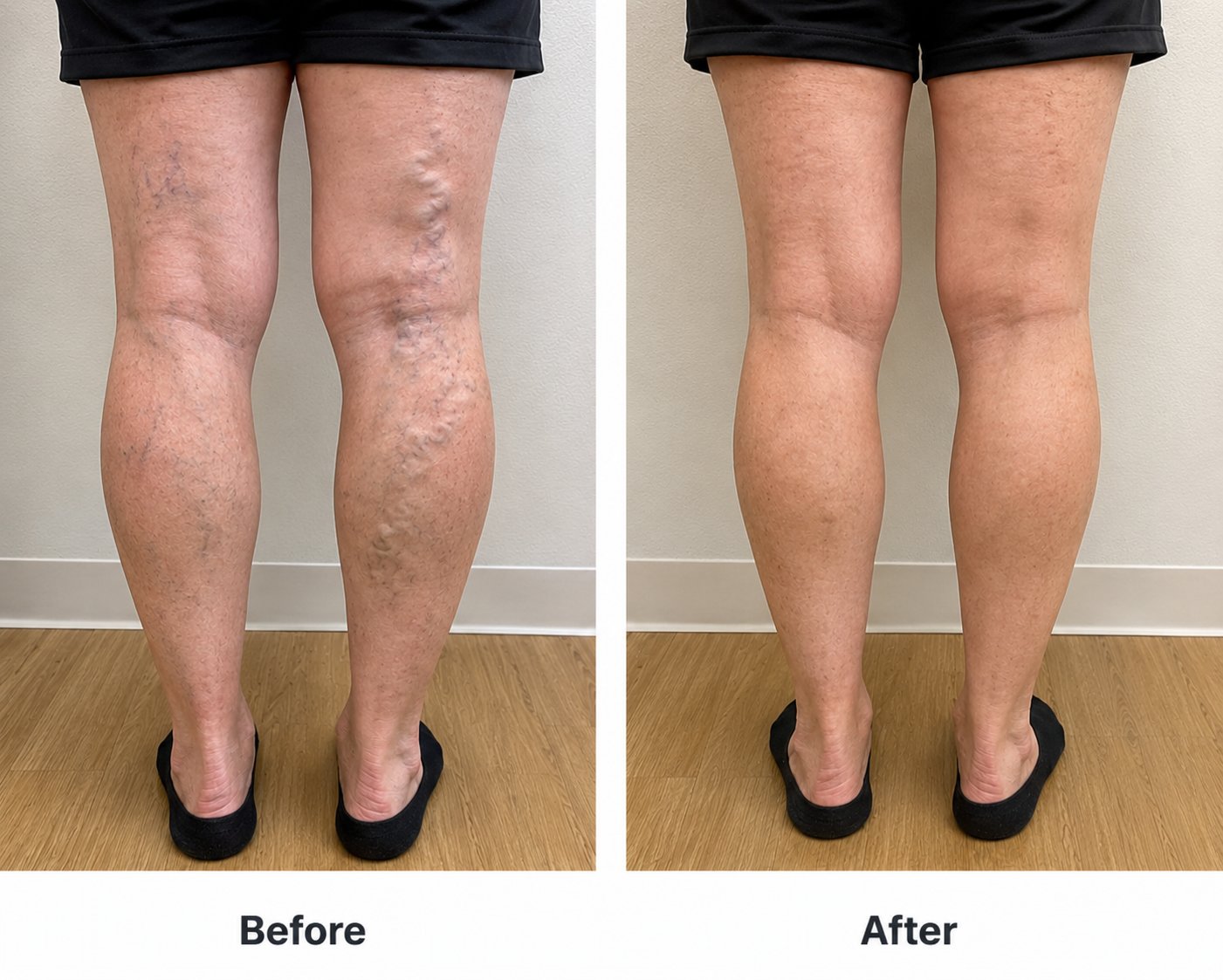
VenaSeal™ is an FDA-cleared, minimally invasive vein closure procedure developed by Medtronic. It uses a specially formulated medical adhesive — delivered through a small catheter — to permanently seal off the diseased saphenous vein, the root cause of most varicose veins. Once the vein is closed, blood naturally reroutes to healthy veins.
Unlike radiofrequency ablation (RFA) or laser treatments, VenaSeal requires no tumescent anesthesia — meaning no multiple needle sticks up and down the leg. Only a single access point is needed. This makes the procedure exceptionally comfortable, with most patients reporting little to no discomfort during treatment.
Why VenaSeal May Be Right for You
No Tumescent Anesthesia
Unlike thermal procedures, VenaSeal requires no numbing injections throughout the leg — just a single access point, minimizing discomfort.
Non-Thermal Technology
No heat is used, eliminating any risk of thermal nerve injury — a particular advantage when treating the small saphenous vein.
Minimal Bruising
Patients consistently report less bruising and post-procedure discomfort compared to thermal-based procedures.
No Compression Stockings Required
In most cases, compression stockings are not required after VenaSeal — making recovery more comfortable and convenient.
Return to Activity Same Day
Patients are able to walk out, drive themselves, and return to normal daily activities the same day as treatment.
FDA-Cleared & Clinically Proven
VenaSeal received FDA clearance in 2015. Clinical studies show closure rates exceeding 95% at 3 years, comparable to RFA.
VenaSeal vs. Other Vein Treatments
VenaSeal
Medical adhesive, single needlestick, no tumescent anesthesia, no compression required, non-thermal, minimal discomfort.
Radiofrequency Ablation
Heat energy, multiple needle sticks for tumescent anesthesia, compression required, thermal-based, highly effective.
Sclerotherapy
Chemical injection, best for spider and small varicose veins, multiple sessions often needed, no heat or adhesive.
Varithena
Injectable microfoam, non-thermal, treats large and tortuous veins, FDA-approved, compression required after treatment.
What to Expect: Step by Step
Free Initial Consultation
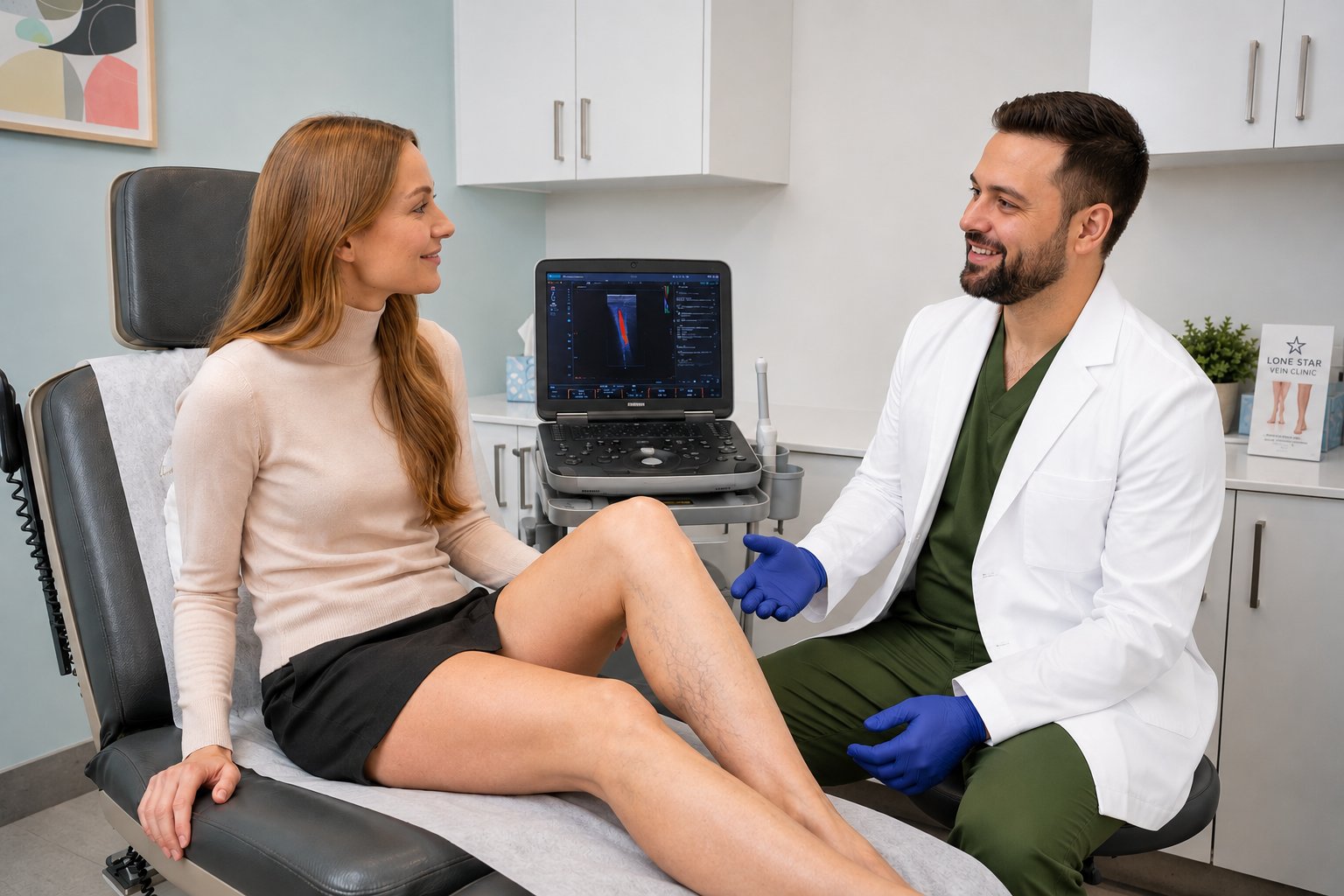
Dr. Abdullah will review your symptoms and medical history to determine if VenaSeal is the right procedure for your venous anatomy and condition.
Venous Duplex Ultrasound
If determined necessary, this paid medical visit billed to your insurance will map your venous anatomy, identify areas of reflux (backward blood flow), and confirm candidacy for VenaSeal. A treatment plan will typically be discussed the same day.
Insurance Verification
Our team verifies your benefits and obtains any necessary prior authorization before scheduling your procedure. We can also discuss estimated costs over the phone — no surprises.
VenaSeal Procedure
Under ultrasound guidance, a small catheter is inserted through a single access point. The medical adhesive is delivered in precise amounts along the diseased vein, sealing it closed. Most patients report only mild pressure or tugging — no significant pain.
Walk Out the Same Day
Patients are able to walk out, drive themselves, and return to normal daily activities the same day. In most cases, compression stockings are not required after VenaSeal.
Follow-Up
A follow-up appointment is scheduled within 1–2 weeks to confirm successful vein closure and monitor your progress.
Insurance Coverage: Varicose vein treatment is often covered by medical insurance, sometimes at 100% depending on your insurance carrier. Our team will verify your specific coverage before any procedure. Learn more about insurance →