What Is Radiofrequency Ablation?
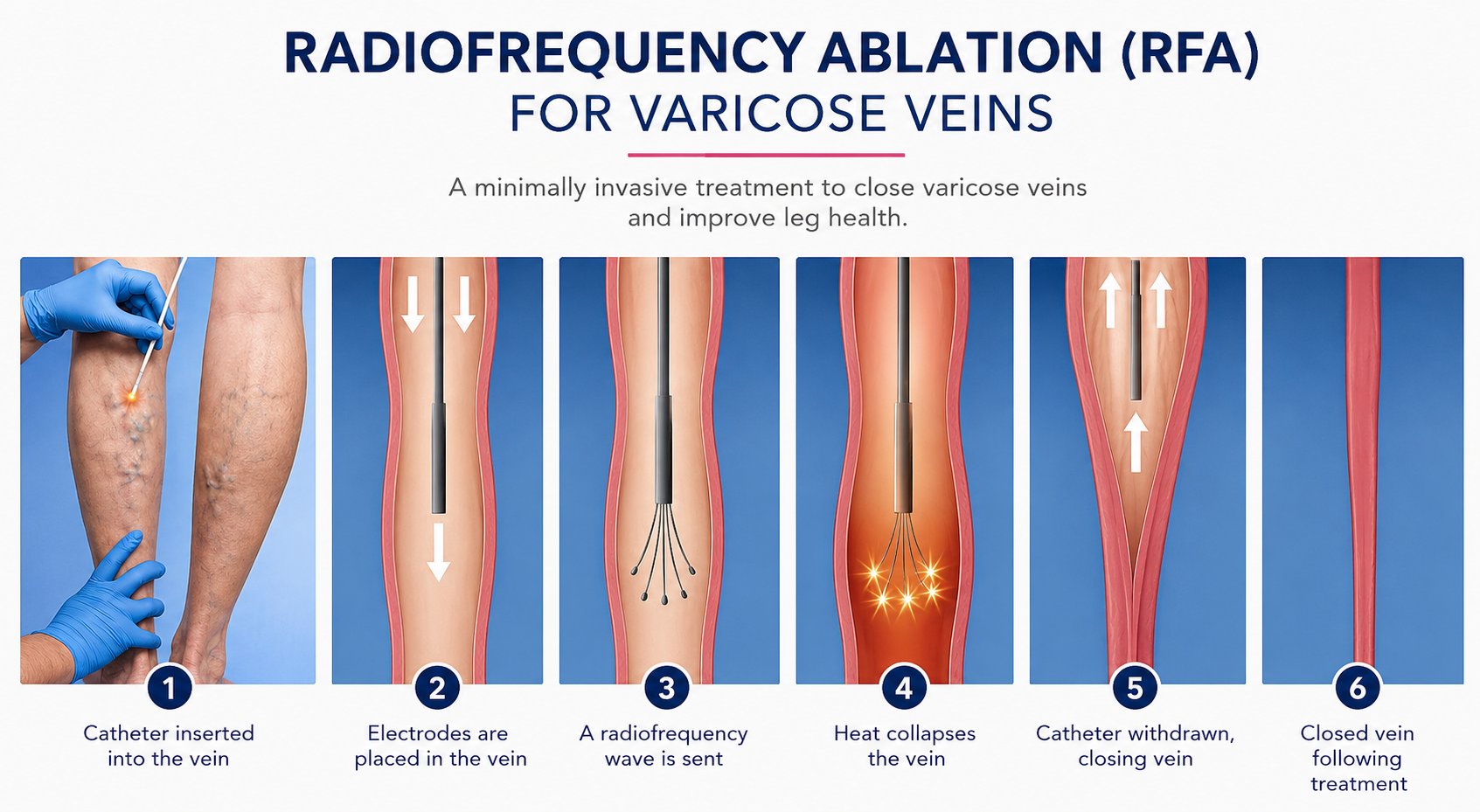
Radiofrequency Ablation (RFA) is a state-of-the-art, FDA-cleared procedure used to treat the underlying cause of varicose veins — a diseased saphenous vein (the large vein running along the length of your leg). RFA uses precisely controlled heat energy delivered through a thin catheter to permanently close the diseased vein, rerouting blood flow through healthy veins.
Unlike traditional vein stripping surgery — which required general anesthesia, incisions, and weeks of recovery — RFA is performed entirely in our Georgetown office under local anesthesia. Patients are able to walk out the same day, drive themselves, and go back to work the same day.
Key Benefits
FDA-Cleared Technology
RFA uses clinically proven radiofrequency energy with a strong safety and efficacy record.
No Surgery or Hospital Stay
Performed entirely in-office under local anesthesia — no general anesthesia required.
Same-Day Recovery
Most patients resume normal light activities the same day as treatment.
High Success Rate
RFA achieves vein closure rates exceeding 95% — the gold standard for saphenous vein treatment.
Minimal Discomfort
Local anesthesia numbs the area; most patients feel only mild pressure during the procedure.
Durable, Long-Lasting Results
Treated veins remain closed long-term, with low rates of recurrence.
What to Expect: Step by Step
Duplex Ultrasound Mapping
Before treatment, Dr. Abdullah performs a comprehensive ultrasound to map your veins and identify the diseased saphenous vein.
Local Anesthesia
Tumescent local anesthesia is injected around the target vein to numb the area and protect surrounding tissue.
Catheter Insertion
A thin, flexible catheter is inserted through a small nick in the skin and guided into the vein using ultrasound.
Radiofrequency Energy Delivery
As the catheter is slowly withdrawn, radiofrequency energy heats and collapses the vein wall, permanently sealing it closed.
Walk Out the Same Day
After compression bandaging is applied, you are free to leave. Compression stockings are worn for several days post-procedure.
Follow-Up Ultrasound
A follow-up ultrasound is scheduled to confirm vein closure and monitor your recovery.
Insurance Coverage: Many vein treatments are covered when medically necessary. Dr. Abdullah's team will verify your benefits before any procedure. Learn more →